Written by Senior Solutions Engineer, Tim Hay-Edie
If the aim is to own the customer experience, why would online retailers take a risk on the delivery proposition?
With supplier-direct, the supplier delivers orders to the customer on behalf of the retailer. In effect, the retailer is outsourcing the warehousing and delivery to the supplier.
The supplier signs up to the retailer's delivery SLAs, but it is up to the supplier how they fulfil the order, including which carriers they use.
This is understandable in some circumstances. If a supplier is using their own fleet to deliver furniture, white goods, or other items that require a 2-man delivery; or delivery and installation, it makes little sense for the retailer to try to impose a standard carrier.
But even here, the retailer doesn't have to give up everything. The job of getting the sofa up a staircase is for the supplier. From a customer experience perspective, the customer comms, and any exception management should remain with the retailer.
However, for products that can be delivered through a conventional tracked carrier network, there's a bigger question: why shouldn’t the retailer own the delivery proposition?
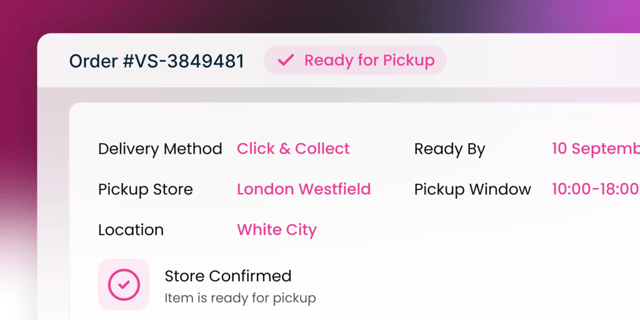
We do this with Click & Collect
There's an interesting inconsistency in the way retailers think about delivery.
Retailers will typically nominate the carrier that suppliers use to deliver Click & Collect orders into their store network. This is because they don't want multiple carriers arriving at the store at different times throughout the day. Multiple deliveries, received and processed at different times, create unnecessary and repetitive overhead for the store.
In this use case, the retailer takes control of the delivery proposition to make delivery into store predictable and manageable. So why should things be different when orders are delivered direct to home? Why is it then acceptable for the supplier to have the autonomy to select carriers?
Supplier-direct doesn't have to mean supplier-controlled delivery
In this scenario, the supplier still warehouses the products. The retailer still outsources 100% of the inventory risk. The supplier still fulfils the order.
But fulfilling the order and controlling what happens post-dispatch are two different things. In so doing, the retailer can now control customer comms throughout the order journey and ensure a consistent experience around delivery exceptions and returns.
From the customer's perspective, it shouldn't matter if the product comes from the retailer's own warehouse or from a dropship supplier. What matters is a consistent customer experience.
They bought from the retailer, not from the supplier holding the SKU. A stocked-in order, and a dropship order delivered by different carriers with different notifications and different returns arrangements, tells the customer two different stories about the same brand.
Owning the carrier relationship would allow retailers to create a much more consistent post-dispatch experience across stocked-in and dropship orders.
In other words: the supplier owns fulfilment, the retailer owns the delivery proposition. One retailer. One delivery experience.
To be clear, this isn't a small ask operationally. Retailer-controlled carrier selection for dropship means either the retailer's systems talk to the carrier directly and the supplier simply packs and dispatches; or the supplier integrates with whichever carrier the retailer has chosen. Across a long-tail of suppliers, that's a lot of change to manage. It's a reason to sequence the rollout carefully, not a reason to rule it out.
The economics nobody is arguing about
The commercial angle, based on economies of scale, may be even more interesting than the customer experience argument.
In a typical dropship model, every supplier is effectively making its own decisions about delivery. That can mean multiple suppliers negotiating independently with carriers and passing a delivered cost back to the retailer. Instead of paying for fragmented delivery volumes supplier by supplier, the retailer could potentially negotiate against combined volume, stocked-in plus dropship together.
The result would be a lower cost per delivery. And every saving on delivery means more margin, or more competitive pricing.
Clearly, this doesn't hold everywhere 100% of the time. A specialist bulky-goods supplier running its own delivery fleet may already have a better rate than the retailer could get, and some suppliers have committed volumes with carriers that a retailer can't simply absorb. The exact economics will depend on category, carrier mix, and how mature the supplier's own logistics already are. This is a principle worth pressure-testing category by category, not a blanket rule.
Where I'd start
If I were advising a retailer on this, I wouldn't try to take back the carrier relationship across the whole dropship estate on day one.
I'd start with the categories where a standard tracked carrier network already applies; where the retailer has real volume to bring to the table; and where supplier logistics maturity is less developed.
I'd use data on customer experience and cost. I'd prove the model; and only then push the initiative wider.
So, should retailers own the delivery proposition? I think so. What the data should settle is which categories and how fast.